
A New Type of Regional Development Platform

A problem with no systemic solution

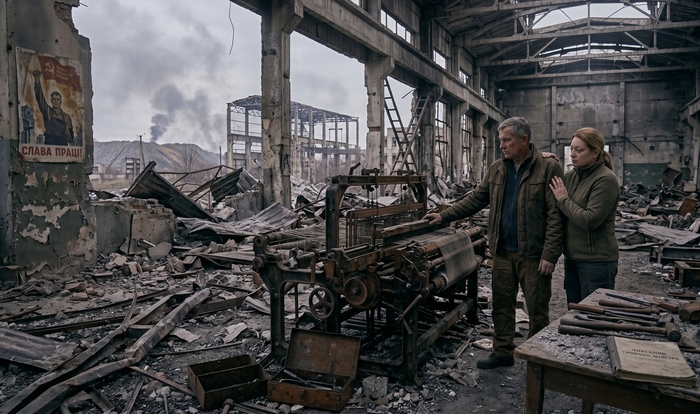
Thousands of people have lost not only housing, but also the economic foundation of their lives — jobs, businesses, and their professional environment.

Context: loss of territoriesloss of economy

The Core of the Problem

Existing support mechanisms for internally displaced persons are primarily focused on humanitarian aid or short-term solutions. They do not create the conditions necessary for restoring economic self-sufficiency and achieving long-term integration.

As a result, a systemic problem emerges:

People possess qualifications but lack opportunities to apply them
Available jobs, if any, often do not match their level of competence
The housing issue remains unresolved or temporary
Social connections and professional environments are lost

This leads to the loss of human capital, demotivation, and the gradual economic exclusion of an entire group of the population.

Where exactly the system breaks down

The core issue is the absence of integrated solutions

Housing, employment, and social adaptation are treated as separate tracks, implemented by different institutions without coordination. As a result, even if individual programs exist, individuals are forced to piece these elements together on their own, which is virtually impossible under the conditions of resource loss.

Missing a model that would:

Combine economic activity and housing infrastructure
Account for the specific needs of age and professional groups
Create an environment for long-term development rather than survival

Why this problem is critical

Failure to address this issue carries long-term consequences:

Decline in economic activity and the community tax base
Increased social burden on the state
Loss of skilled human capital
Exacerbation of regional imbalances
At the same time, it is precisely this category of people that possesses the potential to rapidly restore economic activity, provided that the appropriate conditions are created.

Investments in integrated models have a multiplier effect: issues of employment, housing, and territorial development are addressed simultaneously.

The origins of the LUTERRA project

The LUTERRA project was formed on the basis of practical experience working with IDPs, analyzing the limitations of current support programs, and realizing the need for a systemic approach.

A fundamental premise was the understanding that:

Economic integration is impossible without resolving the housing issue
Housing solutions are ineffective without an economic foundation
Social adaptation only occurs in an environment where people have a role and clear prospects

Consequently, there emerged a need to develop an integrated model that unites these elements into a unified system.

From problem to solution

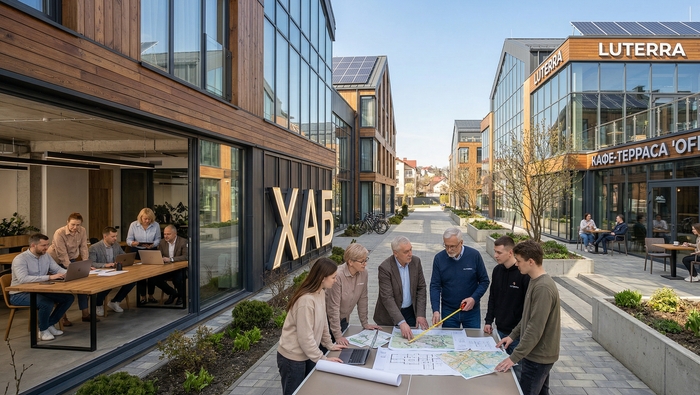
LUTERRA offers an approach in which jobs, housing, and environment are viewed as interconnected components of a single development system.
This exact logic became the foundation of the project model.

Learn more about the LUTERRA model